UWA Changemaker: Associate Professor Andrea Gaynor BA '96, PhD '02
Environmental historian, School of Humanities, The University of Western Australia
UWA and me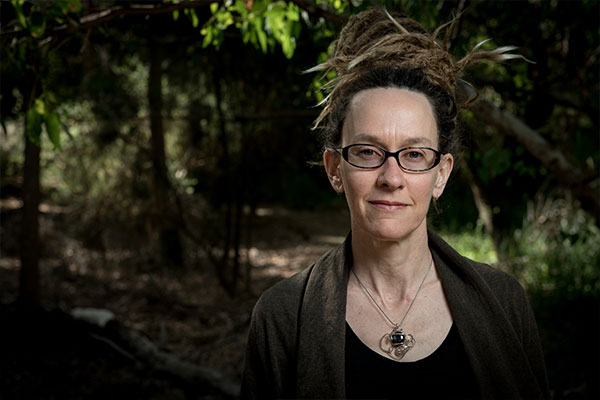
I’m an environmental historian in the School of Humanities at UWA. I teach units in a range of subjects including environmental history, urban history, Australian history and the theory and practice of history. I also research and write across a range of environmental historical topics including cities, water, animals and fisheries. I love finding new and significant historical stories to tell, whether they’re based on archival files that have lain unopened for decades, or asking new questions of well-known sources. We’re also really fortunate at UWA to have really bright and committed students. I love hearing their perspectives on course material, and working with them to hone their analytical skills and nurture their developing historical imaginations. I also enjoy the leadership roles I play as Chair of the History Discipline Group, convenor of the UWA Ecology, People, Place Research Group and through my involvement with both The Beeliar Group of Professors for Environmental Responsibility and the Australian and New Zealand Environmental History Network.
Illuminating the complex human dimensions of environmental problems
For almost as long as I can remember I have been deeply committed to the environment. During my time at UWA I discovered environmental history and took to it as a way to use my passion for writing to increase understanding and awareness of the complexity and consequences of human-environment relationships over time. As we increasingly recognise the challenges we now face, in the midst of the sixth great extinction and runaway anthropogenic climate change, environmental history isn’t going to save the world but it can certainly help: it explains how we got here, holds wrong-doers to account, inspires and empowers communities that are working towards positive change, and illuminates the complex human dimensions of environmental problems and their potential solutions. I like to see my stories motivating activists, informing scientists, concerning citizens and advising policymakers. I hope that they change – even incrementally – the way my readers think and feel about the environment.
Causality and consequences
Environmental problems are, by and large, caused not by the environment but by people. They are often multi-dimensional, operate over variable timescales, and involve entrenched interests. Causality and consequences are often separated in time, space and social class; for example, marginalised social groups are often the most vulnerable to pollution and other anthropogentric environmental hazards not of their making. A basic problem is that dominant cultural and economic forms arose at a time when it was still possible to believe that the earth’s resources were effectively infinite, and that technologies (including environmental management technologies) would enable resource problems to be solved. These systems are not well-equipped to deal fairly with the reality of finite resources, and make it altogether too easy to ignore this reality. However, environmental history also includes encouraging stories about people and communities who have sought and found ways of doing things differently, and these provide hope - an essential resource in these often dispiriting times.
Learning from a remarkable Indigenous achievement
In Australia we should all know that the land we live on – in suburban houses, in city apartments, in towns and on farms – was once (and in many cases still is) owned and loved by people who had developed an amazing capacity to live sustainably on the land over millennia. When you realise what it took, in terms of knowledge and cultural institutions, to be able to live reliably from day to day, season to season, with and from the land alone, you cannot help but respect this remarkable achievement. While our sedentary, capitalist society isn’t going to engage in wholesale adoption of Indigenous values anytime soon, we should recognise that attending closely to the elements of this Indigenous achievement can provide guidance and inspiration that are essential to the task of living sustainably over coming millennia. While recognising the importance of knowing and respecting local places, in a globalised world we need to also take responsibility for the ‘shadow places’ around the world that are often degraded as they sustain us.
Stay up-to-date with Andrea on Twitter @enviro_history or by reading more of her published work: